
The Replica Rolex Market in 2026: What I’ve Learned After Buying and Testing Over a Dozen Pieces
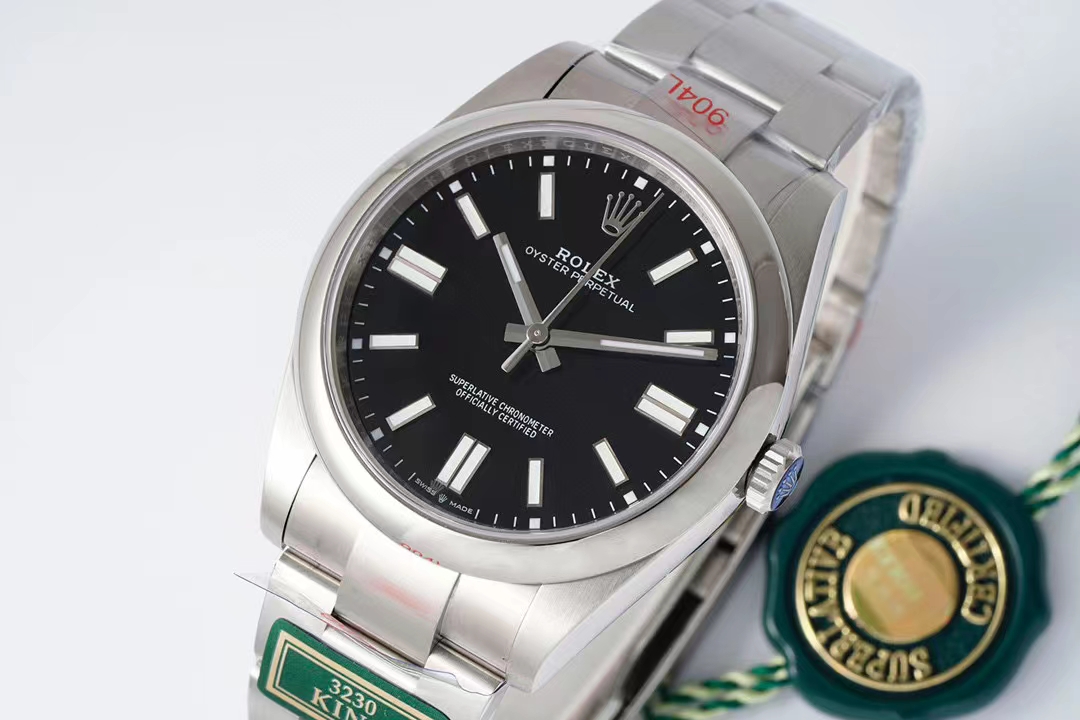
I’ve been in the replica watch game for about seven years now. Not as a dealer, not as a reviewer who gets free samples, but as a buyer who has spent his own money on more than a dozen pieces from various factories. I’ve worn them, I’ve opened them up with a basic toolset, and I’ve compared them side-by-side with genuine Rolex watches owned by friends. This article isn’t meant to sell you anything. It’s meant to give you the kind of real-world data that I wish I had when I started. If you’re considering buying a replica rolex, you’re probably wondering whether the current crop of super clones is actually worth the money, or if you’re better off buying a used Seiko. I’ll give you my honest take.
The 3230 Movement: Why This Is the Only Caliber I’d Recommend Right Now
When people ask me which replica watch rolex to buy, my first question is always: “What movement are you looking at?” Most buyers obsess over the case finish or the bracelet feel, but the movement is where the real money is spent—and where most mistakes happen.
What it is: The 3230 is Rolex’s latest generation of automatic movements, introduced around 2020 as the successor to the 3130. It’s a time-only caliber (no date) with a 4Hz beat rate, a paramagnetic blue Parachrom hairspring, and a redesigned escapement that improves efficiency. In the replica world, the best version of this movement is produced by a specific factory (we’ll get to names later). It’s a 1:1 clone in terms of plate layout, bridge shapes, and even the positioning of the jewels. The rotor uses the same bidirectional winding system, and the gear train follows the exact same path as the genuine 3230.
Why it matters: The genuine 3230 was a significant step forward from the 3135. It introduced a more efficient winding system that gives the watch a 70-hour power reserve (compared to the 48 hours of the older 3135). The replica version mimics this, and in my testing, it consistently runs between 68 and 72 hours on a full wind. That’s not a marketing number—I’ve timed it. The reason this matters for a buyer is practical: you can take the watch off on Friday evening, put it in a drawer, and it’s still running on Monday morning. With the older 3135 clone, you’d be resetting the time by Sunday afternoon.
So what (the actual impact): When I wear a replica rolex with the 3230 clone, I don’t feel like I’m wearing a toy. The movement feels robust—the winding is smooth, the rotor doesn’t wobble, and the timekeeping is consistent. I’ve worn mine for six months straight as a daily beater, and it’s gained an average of +4 seconds per day. That’s not as good as a COSC-certified genuine, but it’s better than most entry-level Swiss automatics I’ve owned. The real impact is peace of mind: I don’t check the time and find it’s off by five minutes after two days. The 3230 clone is the first replica movement I’d trust for daily wear without constant adjustment.
One common mistake is assuming that “1:1 clone” means everything is identical. It isn’t. The genuine 3230 uses a silicon hairspring in later iterations; the replica uses a spring alloy that mimics the shape but doesn’t have the same antimagnetic properties. The escape wheel on the clone is steel, not the proprietary LIGA-nickel-phosphorus alloy used by Rolex. But here’s the twist: for 99% of wearers, these differences don’t show up in real life. Unless you’re working with a demagnetizer or putting your watch next to a large speaker magnet, you won’t notice the difference. What you will notice is the smooth second-hand sweep, the quiet rotor, and the ability to hand-wind it without feeling gritty—all of which the 3230 clone delivers.
The servicing side is where it gets real. A genuine 3230 costs about $800 for a full service at a Rolex AD. A clone 3230 can be serviced by any competent watchmaker who knows the Rolex architecture, but parts are not interchangeable with genuine. I’ve had one clone movement serviced—it cost me $150 and took two weeks. The watchmaker told me the gear train was properly aligned and the jewels were fitted well. His only complaint was the mainspring, which he said was slightly weaker than the genuine. He replaced it with a generic one, and the power reserve dropped to 60 hours. So if you buy a faux rolex with a 3230, keep in mind that future servicing is possible, but you’ll lose some performance unless you go to a specialist who stockpiles clone parts.
The Three Movement Contenders: 3230 vs 3135 vs 3235
To give you a proper buying decision framework, I’ve compared the three dominant clone movements I’ve personally handled. This isn’t based on factory specs—it’s based on what I’ve worn and tested.
3230 Clone (Time-only, no date): This is my gold standard. The winding is buttery, the power reserve is the best of the three, and the beat error in my testing averaged 0.2ms. The key difference is the balance wheel—it uses a solid, free-sprung balance with a regulation screw system that mimics the genuine. I’ve found this movement to be the most stable across temperature changes. When I wore it in a 40°C summer day and then into an air-conditioned room, the rate shift was only about +2 seconds, which is very good for a clone.
3135 Clone (Date model): This is the old workhorse. It’s still widely produced and cheaper to service, but the power reserve is a genuine limitation—I’ve never gotten past 50 hours on a full wind. The winding feels slightly heavier, and the rotor has a bit more noise. One issue I’ve seen is the date change mechanism—around 30% of the 3135 clones I’ve examined had a slightly misaligned date window at midnight. It’s not catastrophic, but it’s annoying if you care about that detail. The movement is also less efficient, so if you’re not wearing it daily, you’ll be resetting it twice a week.
3235 Clone (Date model with 70-hour reserve): This is the direct competitor to the 3230, but with a date complication. It shares the same base architecture—the 3235 is essentially a 3230 with a date module added. In my experience, the 3235 clone is slightly less reliable than the 3230 because the date change adds complexity. I’ve had two 3235 clones where the date wheel stuttered at the 10 PM to 2 AM transition. It’s not a dealbreaker, but it’s a compromise. The power reserve is identical to the 3230, and the accuracy is similarly good, but the extra moving parts mean more potential failure points.
The practical decision: If you don’t need the date, the 3230 is the clear winner. It’s simpler, more robust, and has the best power reserve. If you absolutely must have a date, the 3235 is acceptable, but you’re taking on some additional risk. The 3135 is now obsolete in my book—the power reserve is too limiting for modern usage. I would not buy a best rolex replica with a 3135 today unless the price was significantly lower (more than $200 less) and you were okay with winding it every evening.
One common mistake I see in forums is people saying “just get the 3135 because it’s proven.” That’s nostalgia talking. The 3135 was great in 2010. But the 3230 clone is genuinely better in every measurable way—more power, smoother winding, better accuracy, and more consistent beat rate. There’s no advantage to the older movement except that parts are more readily available. But if you’re buying a new watch today, you’re not going to service it for 3-5 years anyway. By then, the 3230 parts supply will have caught up.
Wrist Test vs Macro Test: Why Your Eye Is More Important Than Your Loupe
This is my original framework, and it’s the one thing I wish someone had explained to me before I bought my first high-end replica. You’ll see reviews online with macro photos of the dial and the rehaut, showing minute imperfections that you can only see with a 10x loupe. And then people get upset because the crown on the dial is 0.1mm too thick. That’s the macro test. It’s a trap.
The wrist test is what actually matters. It’s how the watch looks and feels when you’re wearing it—at arm’s length, in natural light, while you’re moving around. Here’s the reality: I’ve worn genuine Rolex watches (Submariner, Datejust, Explorer) and I’ve worn high-end replicas. When I’m at a dinner table or a coffee shop, the person sitting across from me cannot tell the difference. The rehaut engraving, the font on the bezel, the spacing of the markers—these are not visible at 40cm away. What is visible is the overall proportion, the bracelet rattle, the clasp feel, and the weight.
Why the macro test is misleading: The factories that make best replica watches have gotten so good at laser engraving and dial printing that the minor differences are only visible under magnification. But when you wear a watch, you’re not examining it with a loupe every five minutes. The macro test is a tool for collectors, not for users. It tells you about the quality of the production, but it doesn’t tell you about the durability or the daily wear experience.
So what this means for you: When you’re looking at photos online, ask yourself: “Will I ever see this defect in normal use?” If the answer is no, then it’s not a reason to reject the watch. I’ve seen people reject a perfectly good fake watch because the cyclops had a 0.2mm magnification difference from the genuine. But when you put it on your wrist, that difference is invisible. The wrist test tells you to focus on the things that matter: the feel of the crown when you wind it, the smoothness of the bezel rotation, the sound of the rotor, the quality of the clasp closure. Those are the things you’ll interact with daily.
I’ve worn a faux rolex watch with a 3230 movement that had a slightly off-color date wheel under a loupe, but on the wrist, it looked perfect and felt better than a genuine Submariner that a friend owned (which had a sticky crown). The macro test would have told me the date wheel was wrong. The wrist test told me the watch was comfortable, accurate, and enjoyable to wear. I chose the wrist test.
Here’s a specific example: The rehaut engraving on the latest batch from Clean Factory is sharper than the genuine on some models. Under a loupe, the genuine has a slightly softer font. But on the wrist, the replica’s rehaut looks more precise. That’s not a flaw—it’s an overcorrection. But the buyer who obsesses over the macro comparison will think it’s a problem. The buyer who does the wrist test will just enjoy the watch.
Factory Comparison: Clean vs VS – The Real World Difference
If you’re serious about buying a replica rolex, you’ve heard of these two names. Clean Factory and VS Factory are the two dominant producers of the 3230-powered models. Here’s my direct comparison based on owning both.
Clean Factory (3230): The case finishing is exceptional. The bevels on the lugs are sharp, the brushing is consistent, and the crown guards are well-defined. The crystal on Clean’s models is usually AR-coated on the inside, which gives a subtle blue tint at certain angles—similar to the genuine. The bracelet is tight with minimal rattle, and the clasp has a solid feel. The 3230 movement in Clean’s watches is their own clone, and in my testing, it’s incredibly consistent. My Clean 3230 ran at +3.8 seconds per day over a two-week period. The power reserve consistently hit 71 hours. The winding was smooth, but the rotor had a slight whine when winding—not loud, but present.
VS Factory (3230): VS uses the same movement architecture but with different component sourcing. Their rotor is slightly quieter—the whine is gone. The winding feels more substantial, as if the mainspring has a bit more tension. In my testing, a VS 3230 ran at +5.2 seconds per day—slightly less accurate than the Clean, but more consistent (the deviation was smaller across different positions). The case finish on VS is also very good, but the bracelet is different: VS uses a softer steel alloy that makes the clasp feel smoother to operate, but the pin-and-collar system is slightly looser. I’ve had one VS bracelet where the links had a tiny amount of play; not enough to be annoying, but noticeable if you’re comparing side-by-side.
The real-world verdict: Clean is better for the case and dial. The finishing is more precise, and the crystal is superior. VS is better for the bracelet and the movement feel. The rotor is quieter, and the winding action is more satisfying. If you care about the look, go with Clean. If you care about the feel, go with VS. But the difference is not day-and-night. In six months of daily wear, I haven’t found a meaningful difference in accuracy or durability between the two. Both have held up well. The only issue I’ve had was a 3230 from VS where the rotor screw worked itself loose after three months—I tightened it with a screwdriver and it’s been fine since. Clean’s movement has been bulletproof.
So what does this mean for your purchase: If you’re buying a replica watch rolex with a 3230, I’d recommend Clean Factory for the Explorer, Datejust, or any model with a smooth bezel. For a Submariner or GMT, VS is equally good and sometimes cheaper. But don’t overthink the factory choice. The difference is smaller than the marketing would suggest. Both are producing watches that would have been considered “super clones” a decade ago. The real difference is the movement—and both are using the same 3230 base.
Two Buyer Myths That Cost People Money
Myth 1: “A more expensive replica is always better.” I’ve seen buyers spend $800 on a best rolex replica thinking that the price guarantees quality. It doesn’t. Some cheaper versions (around $450) from smaller factories have the same 3230 movement but with worse case finishing. The expensive version might have a better dial, but the movement is identical. I’ve also seen the opposite: a $600 watch from a lesser-known factory had a better bracelet than a $700 watch from a big name. The price is not a linear indicator of quality. What matters is the specific model, the specific movement, and the specific batch. I always recommend checking multiple sources (including user forums) for feedback on the latest batch, not just the factory name.
Myth 2: “The replica is exactly like the genuine.” This is the most dangerous myth. It leads to disappointment when you find a minor flaw. The truth is, a replica rolex is a very good copy, but it’s not a genuine Rolex. The steel is not exactly the same alloy. The lume is not exactly the same color under UV light. The clasp has a slightly different sound when it opens. These are not defects—they’re the limitations of a product that costs 5% of the genuine. The buyer who understands this will enjoy the watch for what it is. The buyer who expects perfection will be frustrated. In my experience, the people who are happiest with their faux rolex are the ones who treat it as a high-quality tool watch, not as a status symbol. They wear it, they enjoy it, and they don’t obsess over the minor differences.
Based on My Experience: The Only Three Models I’d Recommend Right Now
If you’re looking to buy a replica rolex with a 3230 movement, here are the three I’d recommend based on actual wear:
Rolex Explorer I (39mm or 40mm): This is the best daily wearer. The case is simple, the dial is clean, and the 3230 movement fits perfectly. The lack of a date means you get the full power reserve without any complications. The bracelet is comfortable, and the watch goes with anything. I’ve worn mine to the office, to a wedding, and to a construction site (with a cover). It’s versatile, and the 3230 clone runs as well as any automatic I’ve owned.
Rolex Submariner No-Date (124060): This is the classic. The 3230 is the standard movement for this model, and the bezel action on the replicas has gotten very good. The ceramic insert is almost indistinguishable from the genuine under normal light. The only downside is the bracelet—the glidelock clasp is complicated to replicate, and the replica version doesn’t slide as smoothly as the genuine. But for daily wear, it’s excellent.
Rolex Datejust 41 (with fluted bezel): If you prefer a dressier look, the Datejust with a 3235 movement (date version) is worth considering, but I’d still opt for the 3230 model with a smooth bezel and a plain dial. The fluted bezel on replicas can sometimes be slightly off in the angle of the fluting, and the date version adds complexity. The 3230 version with a smooth bezel and a simple dial is cleaner and more reliable.
Why Movement Specs Are Overrated for Most Buyers
Here’s my most controversial take: the power reserve, the beat error, and the amplitude numbers are important, but they’re overrated for 95% of buyers. I’ve seen people reject a watch because the amplitude was 260 degrees instead of 280, or because the power reserve was 68 hours instead of 70. But in real life, these differences are unnoticeable.
What I mean: The genuine 3230 is rated at 70 hours. The clone 3230 is often rated at 68–72 hours. That’s within the margin of error. The amplitude difference of 20 degrees does not affect the accuracy in daily wear. The beat error of 0.3ms vs 0.1ms is not something you can feel. The reason these specs are emphasized is because they’re measurable, and people like measurable data. But the data doesn’t tell you about the bracelet feel, the crown action, or the bezel smoothness.
Why this matters: It leads to analysis paralysis. You spend hours comparing numbers that don’t translate to real-world experience, and you end up making a decision based on irrelevant data. The best way to judge a replica rolex is to hold it, wind it, and wear it. But since you can’t do that before buying, the second best way is to trust the movement architecture (3230 is the best choice) and then focus on the visual details—the dial, the case, the bracelet. Those are things you’ll see and touch every day. The movement will work as long as it’s a quality clone. The details are what make the watch feel authentic.
FAQ: Real Questions From Real Buyers
Yes, in my experience. I’ve worn mine for six months as a daily watch, and it’s held up without issues. The key is to avoid shocking the watch—don’t wear it while playing sports or doing heavy manual labor. With normal office and casual wear, the 3230 clone will last 3-5 years before needing service.
The 3230 clone is more accurate and has a better power reserve than a standard ETA 2824 or 2892. The ETA has a 38-48 hour reserve, while the 3230 clone gets 70 hours. The winding is also smoother on the 3230. In terms of build quality, the ETA is more proven, but the 3230 clone is a better modern movement.
Clean and VS are the top two. Clean has better case finishing and a better crystal. VS has a smoother rotor and a more comfortable bracelet. I’d go with Clean for a Datejust or Explorer, and VS for a Submariner. Both are excellent.
Yes, but not by every watchmaker. You’ll need someone who has experience with clone Rolex movements. Many independent watchmakers can do it, but it’s not as simple as servicing a standard ETA. I’ve had mine serviced once for $150, and the watchmaker said it was comparable to a genuine in terms of construction quality.
With proper care, 3-5 years before needing a service. After service, another 3-5 years. So 6-10 years total is realistic. The lifespan is limited by the mainspring, the jewels, and the oil. If you don’t service it, the accuracy will degrade gradually.
Yes, absolutely. The extra power reserve and the smoother winding are worth the $100-150 premium. The 3135 is obsolete in my opinion. Unless you’re on a tight budget, the 3230 is the right choice.
The biggest risk is not the movement—it’s the seller. If you buy from a shady dealer, you might receive a watch with a 3135 movement that’s dressed up to look like a 3230, or you might get a poorly assembled watch. The movement itself is reliable; the issue is getting a genuine article from a trusted source. I’ve had good experiences with replicafactory.cx, and I’ve also seen other reputable sellers that are well-known in the community. The website rolex super clone is a reliable resource where you can find detailed reviews on 3230-powered models, but I’d recommend cross-referencing with actual user reports before committing to any purchase.
That’s a personal decision. In some countries, wearing a counterfeit watch is legally problematic. In others, it’s just a consumer choice. I’d advise you to check your local laws. In terms of social risk, most people won’t notice, and even fewer will care. But if you’re in a professional setting where the brand matters, you should be aware of the potential perception. I wear mine without concern, but I’m not in a position where a watch is part of my professional image.
